Questions to Ask Before Buying a Used Car


Buying a used car can save thousands of dollars — or become an expensive mistake if important details are ignored. Many buyers focus only on price, mileage, or appearance, while hidden accident history, flood damage, salvage titles, and odometer fraud remain unnoticed until repairs begin.
Before signing papers or sending money, smart buyers ask the right questions.
1. Has the vehicle been in an accident?
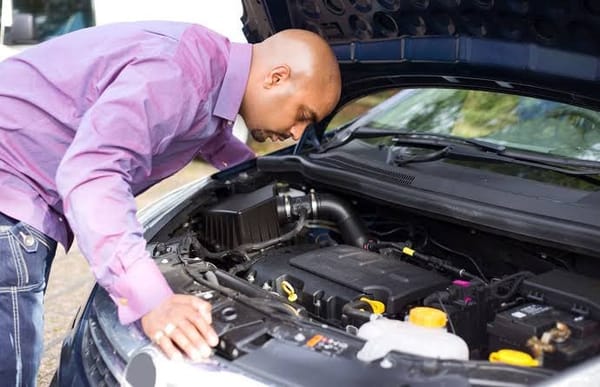
Not all accident damage is visible.
Some vehicles are professionally repaired and look clean on the outside while hiding:
- frame damage,
- airbag deployment history,
- suspension issues,
- structural repairs.
Always ask:
- Was the car involved in a collision?
- Were airbags replaced?
- Are repair invoices available?
A VIN history report can often reveal accident records that sellers avoid mentioning.
2. Does the car have a salvage or rebuilt title?
This is one of the most important questions.
A salvage title usually means:
- the insurance company declared the vehicle a total loss,
- repair costs exceeded vehicle value,
- severe flood, collision, or theft damage occurred.
Some rebuilt vehicles are repaired correctly. Others become long-term financial problems.
Always verify:
- title status,
- registration history,
- auction records,
- insurance limitations.
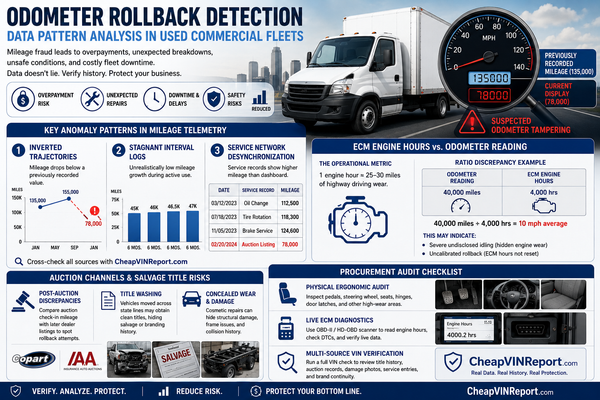
3. Is the mileage original?
Odometer fraud still happens frequently in the used car market.
Warning signs include:
- steering wheel wear not matching mileage,
- worn pedals,
- inconsistent maintenance history,
- suspiciously low mileage for the vehicle year.
Mileage inconsistencies can often appear inside VIN reports and auction databases.
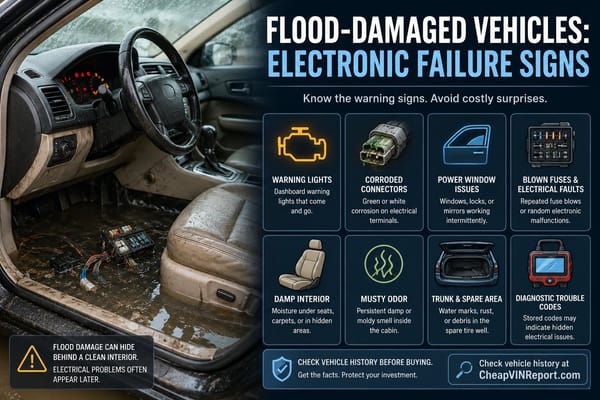
4. Was the car exposed to flooding?
Flood-damaged cars can create electrical nightmares months later.
Ask:
- Has the vehicle ever been exposed to flood or water damage?
- Was it sold through an insurance auction?
- Are there moisture or corrosion signs?
Common flood indicators:
- musty smell,
- rust under seats,
- fogged headlights,
- electrical glitches,
- water stains inside the cabin.
- 5. How many owners did the vehicle have?
Frequent ownership changes can indicate recurring problems.
Multiple short-term owners sometimes suggest:
- expensive maintenance,
- unreliable performance,
- hidden defects,
- dealership resales after complaints.
6. Can the seller provide maintenance records?
A well-maintained vehicle usually has:
- oil change history,
- brake service records,
- tire replacement documentation,
- repair invoices.
No documentation does not automatically mean a bad car — but it increases risk.
7. Was the vehicle sold at an auction?
Auction vehicles are not always bad deals, but buyers should understand the risks.
Some auction cars:
- were repossessions,
- had flood damage,
- came from insurance claims,
- were declared salvage.
Checking auction history through VIN databases helps identify potential hidden problems.
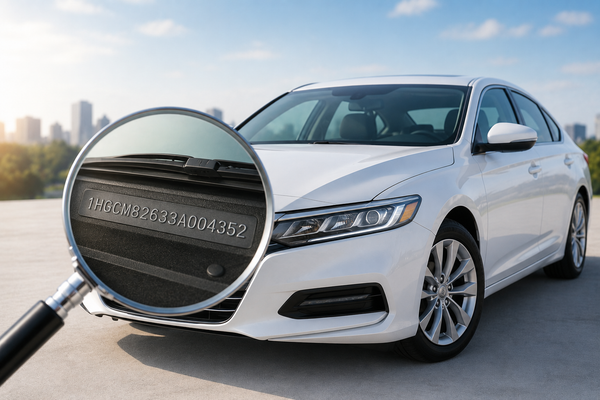
8. Did you verify the VIN before purchase?
This is the final and most important step.
A VIN report can help uncover:
- accident history,
- salvage title records,
- flood damage,
- mileage inconsistencies,
- ownership history,
- auction activity.
Before buying any used vehicle, always verify its history independently.
👉 VIN checks and vehicle history research:
CheapVINReport