Flood-Damaged Vehicles: Electronic Failure Signs Buyers Should Know

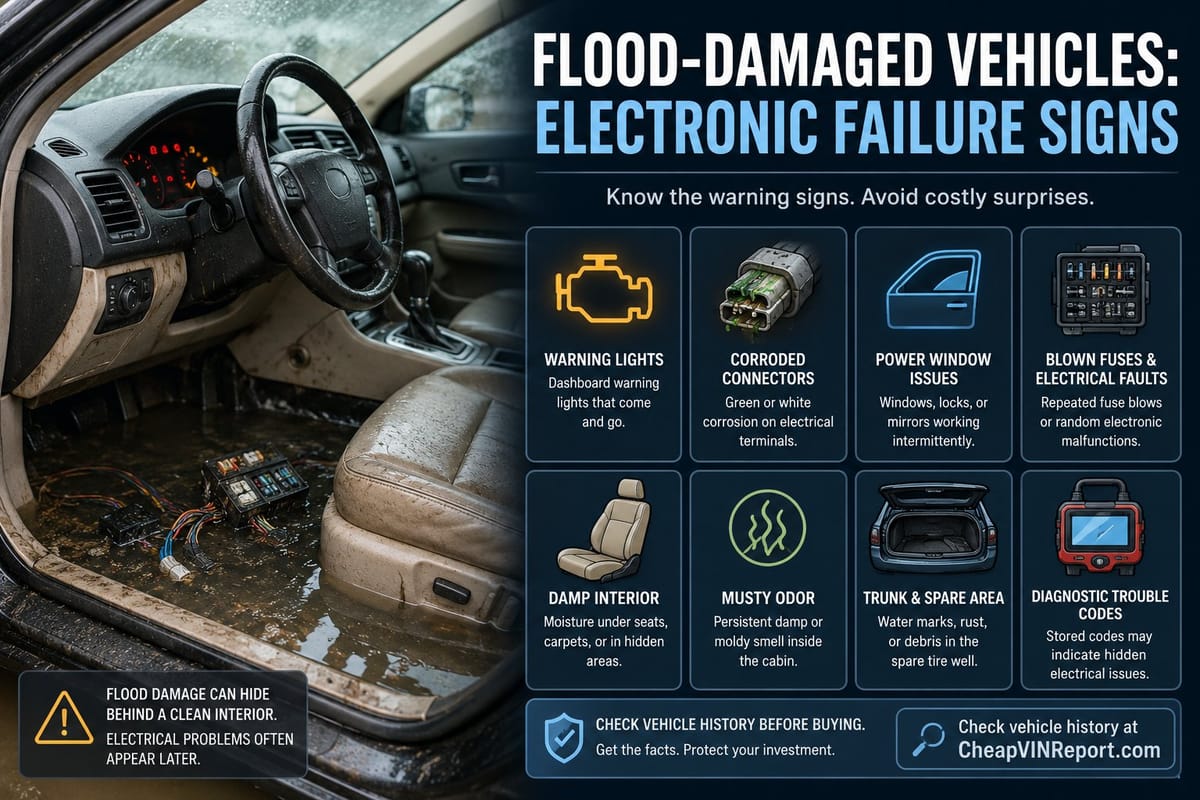
Flood damage can be one of the hardest problems to identify in a used vehicle. A car may look clean, run normally during a short test drive, and still have hidden electrical damage caused by water exposure.
Unlike visible body damage, electrical problems can appear weeks or months after a vehicle has been cleaned and repaired. Understanding the warning signs can help buyers avoid unexpected repair costs.
Why Flood Damage Is So Difficult to Detect
Modern vehicles rely on dozens of electronic control modules, sensors, wiring harnesses, and connectors. Many of these components are located under carpets, inside doors, beneath seats, or in other areas that are not immediately visible.
When water reaches these components, the vehicle may continue operating normally at first. Corrosion and electrical resistance can develop later, causing intermittent failures that are difficult to diagnose.
This is why a clean interior does not necessarily mean that a vehicle has never been exposed to water.
1. Electrical Problems That Come and Go
One of the most important warning signs is an electrical problem that appears intermittently.
For example:
- Interior lights work sometimes but not always.
- Windows operate inconsistently.
- Door locks behave strangely.
- Dashboard warning lights appear and disappear.
- The infotainment system randomly restarts.
- Sensors produce inconsistent readings.
Intermittent faults can be particularly suspicious because moisture or corrosion may be affecting electrical connections rather than causing a complete component failure.
2. Corrosion Around Electrical Connectors
Check accessible electrical connectors for signs of oxidation or corrosion.
Pay particular attention to areas beneath seats, near door wiring, around the fuse box, and in other low areas of the vehicle.
Look for:
- Green or white deposits on metal contacts
- Rust on electrical terminals
- Discolored connectors
- Brittle wiring
- Signs that connectors have been recently replaced or cleaned
A single corroded connector does not automatically prove flood damage, but multiple signs in different areas deserve further investigation.
3. Unusual Dashboard Warning Lights
Flood-damaged vehicles can develop problems across multiple electronic systems.
A buyer may notice warning lights related to:
- Airbags
- ABS
- Traction control
- Engine management
- Parking sensors
- Electronic stability systems
The important point is not simply whether a warning light is currently illuminated. A diagnostic scan can reveal stored fault codes that may not be obvious during a normal test drive.
4. Problems With Power Windows and Door Electronics
Doors contain a surprising amount of electronics.
Depending on the vehicle, water exposure can affect window motors, switches, speakers, locking mechanisms, wiring, and control modules.
Test every window, door lock, mirror adjustment, and other electrical function individually.
If several components on the same door behave strangely, investigate further instead of assuming that each component has independently failed.
5. Damp or Recently Replaced Interior Materials
A strong cleaning job can hide some evidence of water exposure.
Look carefully at:
- Carpeting
- Seat rails
- Floor mats
- Under-seat areas
- Trunk carpeting
- Spare-wheel compartments
- Lower sections of door panels
Freshly replaced carpeting or unusually clean areas can be worth investigating, especially when they do not match the condition of the rest of the interior.
Also look for water lines, staining, mud residue, or unusual odors.
6. Strange Odors
A persistent musty or damp smell can be another warning sign.
However, odor alone is not enough to establish flood damage. Vehicles can develop unpleasant smells for many reasons.
The more useful approach is to combine odor with other evidence such as corrosion, electrical faults, water staining, or historical records.
7. Check the Trunk and Spare-Tire Area
The trunk is easy to overlook during a normal inspection.
Lift the floor covering and inspect the spare-tire well or storage compartment.
Look for:
- Standing-water marks
- Rust
- Mud or debris
- Damp insulation
- Corroded fasteners
- Water stains
Because these areas are relatively concealed, evidence of previous water exposure may remain even after the visible interior has been cleaned.
8. Don't Rely Only on a Test Drive
A short test drive can tell you how the vehicle behaves at that moment. It cannot necessarily reveal electrical problems that may develop later.
Before purchasing a vehicle with possible water exposure, consider combining:
- A detailed visual inspection
- An electronic diagnostic scan
- Inspection of accessible wiring and connectors
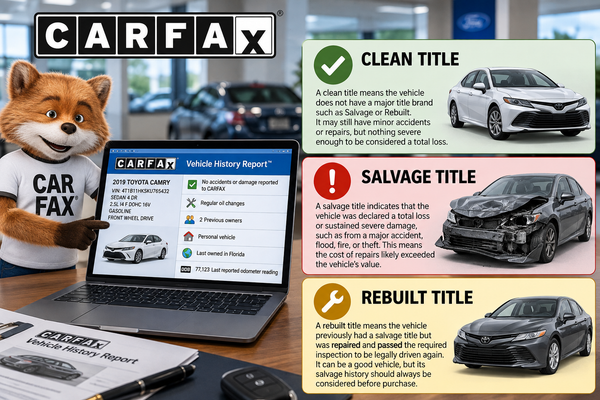
- A review of the vehicle's title and history
- Auction photographs, if available
- An independent pre-purchase inspection
Historical information is particularly important when the vehicle may previously have been sold through an insurance or salvage auction.
Check the Vehicle's History Before Buying
If a vehicle has previously suffered flood or water damage, the event may appear in its historical records even if the current seller does not mention it.
VIN-based history information can help buyers identify previous damage records, title events, auction appearances, and other historical information that may not be visible during a basic inspection.
The goal is not to assume that every previously damaged vehicle is unsafe. It is to understand what happened and determine whether the repairs were properly completed.
Final Thoughts
Flood damage can remain hidden long after a vehicle has been cleaned and repaired.
Intermittent electrical failures, corrosion, unusual odors, water marks, damaged connectors, and inconsistent electronic systems can all justify a closer inspection.
If several warning signs appear together, don't rely on the vehicle's current appearance alone. Review its history, inspect the electronics carefully, and have an independent professional evaluate the vehicle before making a purchase.
Check vehicle history before buying at CheapVINReport.
Review available vehicle-history information and investigate a VIN before committing to a used vehicle.
Check vehicle history at CheapVINReport