Common CARFAX Terms Explained: Clean Title, Salvage Title, and Rebuilt Title

When reviewing a CARFAX report, you may come across several common terms related to a vehicle’s title status and history. Understanding these terms can help you evaluate a used car more carefully and identify potential issues before making a purchase.
Clean Title
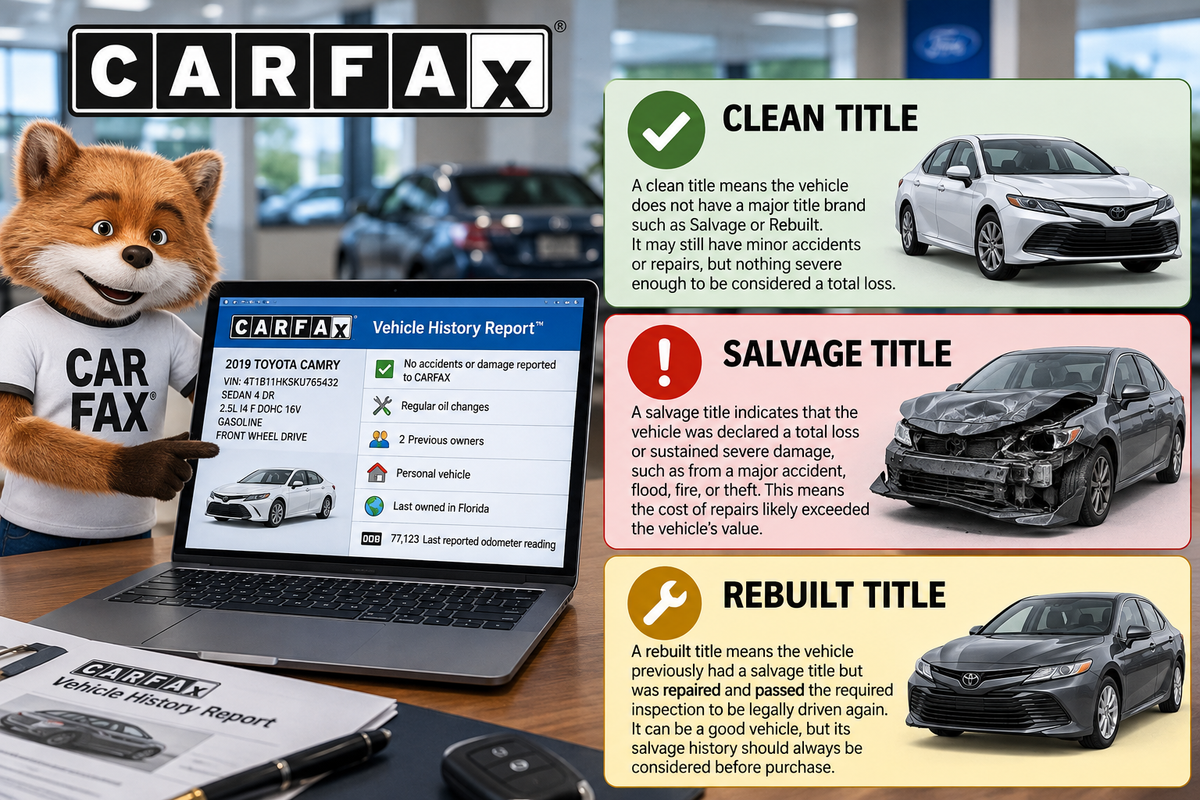
A Clean Title generally means that the vehicle does not currently carry a major title brand such as Salvage or Rebuilt.
However, a clean title does not necessarily mean that the vehicle has never been involved in an accident. A car may have previous accident or repair records without the damage being severe enough to result in a branded title.
For this reason, buyers should look beyond the title status and review the vehicle’s complete available history, including accident records, mileage, ownership history, and maintenance information.
Salvage Title
A Salvage Title generally indicates that a vehicle was declared a total loss or sustained damage serious enough to meet the applicable salvage-title requirements.
Depending on the vehicle and jurisdiction, this may be associated with:
- Major collision damage
- Structural or frame damage
- Flood or water damage
- Airbag deployment
- Theft recovery
- Fire damage
- An insurance total-loss declaration
The exact rules for issuing a Salvage Title vary by U.S. state and jurisdiction.
If you are considering a vehicle with a salvage history, it is particularly important to determine what originally happened to the car and how extensively it was damaged.
Rebuilt Title
A Rebuilt Title typically refers to a vehicle that previously had a Salvage Title but was subsequently repaired and completed the inspection or documentation process required by the applicable jurisdiction for it to return to the road.
A rebuilt vehicle may be operational and legally registered, but its previous salvage history remains an important consideration.
Before purchasing a vehicle with a Rebuilt Title, consider checking:
- Photos showing the vehicle before repairs
- The nature and extent of the original damage
- Repair invoices and documentation
- Structural and frame condition
- Airbags and other safety systems
- Mileage history
- Registration and title records
- The quality of the completed repairs
An independent pre-purchase inspection can also help identify problems that may not be obvious from the history report alone.
Why Title Status Matters
A vehicle’s title status can provide important information, but it should not be evaluated in isolation.
A vehicle history report may also contain records related to accidents, reported damage, mileage, previous owners, service history, registration events, and other information associated with the VIN.
It is also important to remember that vehicle history reports depend on information reported to the databases they use. An event that does not appear in a report did not necessarily never happen.
For that reason, a history report is best used alongside the vehicle’s documentation, a physical inspection, and an independent mechanical evaluation.
Check a Vehicle’s History by VIN
Before buying a used vehicle, checking its VIN can help you uncover important information about its recorded history.
You can learn more about vehicle history reports and common CARFAX terminology in the CheapVINReport FAQ.
Understanding terms such as Clean Title, Salvage Title, and Rebuilt Title can make it easier to interpret a vehicle history report and know which areas deserve additional inspection before you buy.