
How to Spot Odometer Rollback: 5 Warning Signs of Mileage Fraud

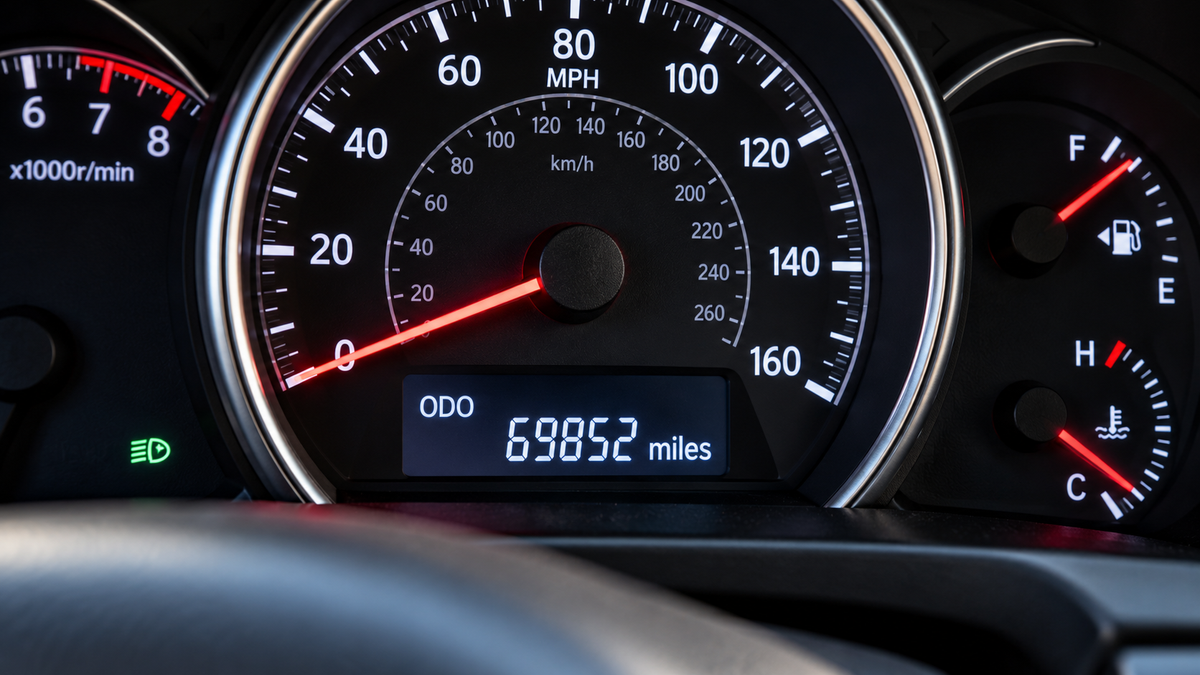
Buying a used car is always a balance between price, condition, age, and mileage. Among these factors, mileage often receives the most attention.
Two identical vehicles from the same model year can have very different asking prices simply because one shows 45,000 miles while the other shows 145,000 miles.
That makes the odometer an important part of a vehicle's perceived value — and also a tempting target for manipulation.
Odometer rollback, sometimes called mileage fraud or odometer tampering, occurs when a vehicle's displayed mileage is altered so that it appears to have traveled fewer miles than it actually has.
Many buyers associate odometer fraud with old mechanical odometers, where the numbers could physically be rolled backward. Modern cars usually use digital odometers, but that doesn't mean the problem has disappeared.
The technology has changed. The basic motivation has not.
A vehicle that appears to have lower mileage may be easier to sell and may command a higher price.
For a used-car buyer, the solution isn't to distrust every low-mileage vehicle. Instead, the goal is to determine whether the mileage fits the rest of the car's history.
Here are five warning signs that deserve closer attention.
Why Mileage Matters So Much When Buying a Used Car
Before looking at the warning signs, it's useful to understand why mileage carries so much weight.
Mileage is commonly used as a rough indicator of vehicle use. Higher mileage can mean more wear on components such as suspension parts, wheel bearings, transmission components, engine accessories, seats, switches, and countless other items.
Of course, mileage alone doesn't determine condition.
A well-maintained highway-driven vehicle with 120,000 miles may be in considerably better condition than a neglected city car with 60,000 miles.
Nevertheless, buyers and sellers use mileage when estimating value.
Imagine two otherwise similar cars:
| Vehicle | Displayed Mileage | Asking Price |
|---|---|---|
| Car A | 52,000 miles | $15,500 |
| Car B | 126,000 miles | $10,900 |
A buyer may be willing to pay substantially more for Car A because it appears to have experienced less use.
But what happens if Car A actually traveled 152,000 miles?
Suddenly the buyer isn't simply dealing with an inaccurate dashboard reading. The mileage may have influenced the price, expectations about maintenance, and the entire purchasing decision.
That's why mileage should be verified rather than simply accepted.
1. The Mileage Seems Too Low for the Vehicle's Age
The first warning sign is also the easiest to notice.
You're looking at a ten- or fifteen-year-old vehicle with surprisingly low mileage.
Is that automatically suspicious?
No.
There are many legitimate reasons for unusually low mileage. A car may have been:
- a second household vehicle;
- owned by someone who drove very little;
- stored for several years;
- used seasonally;
- part of a collection;
- driven primarily for short local trips.
The mistake is assuming either extreme.
Low mileage isn't automatically genuine, but it isn't automatically fraudulent either.
Look at the whole vehicle
Suppose you're considering a 12-year-old sedan showing 34,000 miles.
That works out to fewer than 3,000 miles per year.
It's possible.
Now examine the rest of the vehicle.
Does the driver's seat look heavily worn?
Is the steering wheel extremely polished?
Are the pedal surfaces worn smooth?
Are frequently used buttons badly faded?
Has the vehicle had numerous suspension or drivetrain repairs that seem unusual for such limited use?
None of these things individually proves anything.
But the combination may create a reason to investigate further.
A useful question is:
Does the displayed mileage make sense when compared with the age, condition, documentation, and known history of this vehicle?
That is much more useful than simply asking whether the number looks low.
2. Historical Mileage Records Move Backward
This is one of the most important warning signs.
Mileage should normally increase over time.
For example:
| Date | Recorded Mileage |
|---|---|
| February 2020 | 31,850 miles |
| June 2021 | 48,300 miles |
| September 2022 | 66,700 miles |
| December 2023 | 84,900 miles |
| Current | 97,200 miles |
There is nothing obviously unusual about that progression.
Now compare it with this:
| Date | Recorded Mileage |
|---|---|
| February 2020 | 51,850 miles |
| June 2021 | 78,300 miles |
| September 2022 | 106,700 miles |
| Current | 69,200 miles |
The second timeline immediately raises questions.
How did a vehicle previously recorded at more than 106,000 miles later display approximately 69,000?
A discrepancy isn't automatically fraud
This distinction is important.
Mileage databases aren't perfect.
A technician might accidentally enter 96,000 instead of 69,000. Miles and kilometers may be confused. Information could be associated incorrectly with an event. An instrument cluster may have been legitimately replaced.
Therefore, a strange mileage entry should be treated as a signal to investigate, not instant proof of criminal activity.
Look for patterns.
One unusual entry surrounded by otherwise consistent records may be a simple error.
Multiple conflicting entries are more concerning.
Build a mileage timeline
When possible, arrange every mileage record chronologically.
For example:
2018 → 24,500 miles
2019 → 38,100 miles
2020 → 51,800 miles
2021 → 67,400 miles
2022 → 82,900 miles
2023 → 101,300 miles
Current → 72,600 miles
Seeing the numbers together makes inconsistencies much easier to identify.
This is one area where a vehicle history report can be helpful because historical odometer readings may appear alongside other recorded events.
CheapVINReport states that its vehicle-history information can include odometer readings and rollback checks, depending on the available records.
3. Physical Wear Doesn't Match the Displayed Mileage
The vehicle itself can provide another layer of evidence.
A dashboard can display a number. Physical wear tells another part of the story.
The key is knowing where to look.
Steering wheel
The steering wheel is touched almost every time the vehicle is driven.
Look for:
- unusually smooth or polished surfaces;
- worn leather;
- peeling material;
- damaged stitching;
- substantial wear around common hand positions.
A worn steering wheel doesn't prove high mileage. Sunlight, cleaning products, rings, driving habits, and material quality can all affect wear.
But it contributes to the overall picture.
Pedals
Brake, accelerator, and clutch pedals are particularly interesting because they receive repeated physical contact.
A very low-mileage vehicle with heavily worn pedal surfaces deserves a closer look.
Again, this isn't proof.
Pedal covers can also be replaced, which is why unusually new pedals in an otherwise worn interior may also deserve attention.
Driver's seat
Look at the outer bolster of the driver's seat.
Drivers repeatedly slide across this area when entering and leaving the vehicle.
Possible signs of heavy use include:
- cracked leather;
- flattened padding;
- damaged stitching;
- fabric wear;
- collapsed side bolsters.
Compare the driver's seat with the passenger seat.
A large difference can sometimes reveal how heavily the driver's position has been used.
Buttons and switches
Check frequently used controls:
- window switches;
- climate controls;
- start button;
- radio controls;
- turn-signal stalk;
- gear selector;
- door handles.
Heavy wear throughout the driver's area combined with extremely low mileage doesn't prove manipulation, but it gives you another reason to verify the vehicle's history.
Think in patterns, not individual clues
This principle applies throughout the inspection.
A worn steering wheel means very little by itself.
But imagine a vehicle with:
low displayed mileage + heavily worn driver's seat + worn pedals + extensive steering-wheel wear + historical mileage inconsistency.
Now you have several independent warning signs pointing in the same direction.
That's much more significant.
4. Service Records Don't Match the Current Odometer
Service records can be one of the most useful sources for checking a vehicle's mileage progression.
When a car visits a dealership, repair shop, inspection station, or other service provider, the mileage may be recorded.
That creates historical reference points.
Suppose you find the following:
| Service Date | Event | Mileage |
|---|---|---|
| April 2019 | Oil service | 38,400 mi |
| January 2020 | Brake service | 51,700 mi |
| October 2021 | Inspection | 69,300 mi |
| July 2022 | Transmission service | 84,600 mi |
| Current | Dashboard | 57,900 mi |
Something clearly requires explanation.
The current mileage is lower than several previous readings.
What documents should you examine?
If available, check:
- dealership maintenance records;
- independent repair invoices;
- oil-change receipts;
- inspection documentation;
- emissions-testing records;
- tire-service invoices;
- registration documents;
- previous sales paperwork;
- warranty records.
Even an old receipt sitting in the glove compartment can sometimes contain a useful mileage reading.
Don't look only for rollback
You should also look for mileage progression that simply doesn't make sense.
Imagine:
2019 — 41,000 miles
2020 — 48,000 miles
2021 — 56,000 miles
2022 — 121,000 miles
2023 — 68,000 miles
The 2022 entry could be an error.
Maybe someone typed 121000 instead of 61000.
That's why individual entries require context.
The objective isn't to find one suspicious number and immediately accuse the seller of fraud.
The objective is to reconstruct the most plausible history of the vehicle.
5. The Vehicle History Contains an Odometer Warning
Vehicle history information can add another valuable piece to the investigation.
Depending on the available records, a report may contain previous mileage readings or warnings associated with the odometer.
However, buyers need to understand the terminology.
Not every odometer warning means the same thing.
Odometer Rollback
A rollback generally refers to a situation where the displayed mileage appears to have been reduced.
For example:
Previous record: 124,000 miles
Later record: 78,000 miles
That kind of sequence requires investigation.
Mileage Inconsistency
An inconsistency means that the available records don't form a logical mileage progression.
It may indicate manipulation, but it may also result from an incorrect entry or another reporting issue.
That's an important distinction.
An inconsistency is a reason to investigate — not necessarily proof that someone deliberately altered the odometer.
Odometer Rollover
Older mechanical odometers sometimes had a limited number of digits.
After reaching their maximum displayed mileage, they could return to zero and begin counting again.
This is different from intentionally rolling an odometer backward.
Not Actual Mileage
Another important phrase buyers may encounter is Not Actual Mileage.
This generally indicates that the displayed odometer reading cannot be certified as the vehicle's true mileage.
The reason may require additional investigation.
CheapVINReport's sample report documentation distinguishes among concepts such as rollback, rollover, mileage inconsistency, and Not Actual Mileage, which is why reading the actual report terminology matters instead of treating every odometer-related entry as identical.
Can Digital Odometers Still Be Manipulated?
A common misconception is that digital dashboards eliminated mileage fraud.
They didn't.
Modern vehicles store information electronically, and depending on the vehicle, mileage-related information may interact with different electronic modules.
The exact systems vary considerably by manufacturer and model.
For a buyer, however, the technical method isn't the most important issue.
The important point is this:
Never assume that a digital number is automatically trustworthy simply because there are no mechanical number wheels.
Verification still matters.
Can a Vehicle History Report Detect Odometer Rollback?
Sometimes it can reveal evidence that raises a serious warning.
But this question requires a careful answer.
A history report doesn't physically inspect the odometer. Instead, it brings together available historical information associated with the vehicle.
If previous records show:
46,000 → 61,000 → 79,000 → 94,000 miles
and the vehicle now displays:
58,000 miles
the historical information provides an obvious reason to investigate.
But suppose there are no mileage records for several years.
A report cannot necessarily tell you what happened during a period for which no information is available.
This is why a vehicle history report should be viewed as an investigative tool rather than an absolute guarantee.
What Else Should You Check in the Vehicle History?
Mileage shouldn't be considered in isolation.
When researching a used vehicle, look at the broader history as well.
For example, depending on the available data, a vehicle-history report may help you review information associated with:
Accidents and damage
Previous damage can influence value and may help explain repairs or replacement components.
Title history
Title-related information can reveal important parts of the vehicle's past.
Ownership history
Multiple ownership changes over a short period can sometimes deserve additional investigation.
Commercial or fleet use
A vehicle's use may help explain why its mileage accumulated faster than expected.
Service history
Recorded maintenance events can provide useful mileage reference points.
Registration events
These may contribute to the overall chronological timeline.
The objective is to create one coherent story.
If the mileage, ownership, service events, title information, and physical condition all make sense together, that's encouraging.
If they tell completely different stories, slow down.
A Practical Mileage Verification Checklist
Before buying a used car, go through the following process.
Step 1 — Record the current mileage
Take a photo of the odometer while inspecting the vehicle.
Don't rely on the number shown in the advertisement.
Step 2 — Check the VIN
Confirm that the VIN on the vehicle corresponds with the VIN shown on the documentation.
Depending on the vehicle, VIN locations may include the dashboard, driver's door area, and other manufacturer-specific locations.
Step 3 — Review available vehicle history
Look for previous mileage entries and arrange them chronologically.
Pay particular attention to backward jumps or unusual changes.
Step 4 — Examine the interior
Compare the claimed mileage with wear on the steering wheel, driver's seat, pedals, controls, and carpeting.
Step 5 — Review service records
Search invoices and maintenance documentation for previous mileage readings.
Step 6 — Compare dates and mileage
Don't examine mileage values independently.
Create a timeline.
Step 7 — Ask the seller about discrepancies
A legitimate explanation may exist.
For example, an instrument cluster may have been replaced and documented.
Ask for supporting records.
Step 8 — Get an independent inspection
If you're seriously considering the vehicle, an inspection by a qualified independent mechanic can reveal issues that aren't visible in a history report.
Example: Putting the Evidence Together
Imagine you're considering a 2016 used car advertised with 62,000 miles.
At first glance, that sounds reasonable.
Then you begin checking.
The driver's seat is heavily worn.
The steering wheel surface is polished and damaged.
An old service invoice shows 74,500 miles in 2021.
Another historical record shows 91,200 miles in 2023.
The dashboard now shows 62,000 miles.
One clue by itself might have an explanation.
But several independent contradictions appearing together make the mileage much harder to accept without further documentation.
Now consider another vehicle.
It's a 2016 model showing 58,000 miles.
The interior condition is consistent with moderate use.
Service documentation shows:
2018 — 14,800 miles
2020 — 27,900 miles
2022 — 39,700 miles
2024 — 49,600 miles
Current — 58,000 miles
Nothing guarantees the mileage is correct, but the available evidence tells a much more consistent story.
That difference is exactly what you're looking for.
What If You Find a Mileage Discrepancy?
Don't immediately assume you have discovered fraud.
First, verify the information.
Check whether the readings use miles or kilometers.
Look at the original documentation if available.
Check whether an entry could contain a simple typing error.
Ask whether the instrument cluster was replaced.
Compare the questionable reading with records immediately before and after it.
For example:
2020 — 52,000
2021 — 155,000
2022 — 64,000
The middle entry looks strange.
It could potentially be 55,000 entered incorrectly as 155,000.
Compare that with:
2020 — 52,000
2021 — 78,000
2022 — 103,000
2023 — 61,000
The second pattern is much harder to explain as one simple typing error.
Context matters.
Don't Judge a Used Car by Mileage Alone
There is another side to this issue.
Buyers sometimes focus so heavily on finding a low-mileage car that they overlook condition and maintenance.
A vehicle with 100,000 properly documented miles, regular maintenance, and consistent ownership history may be a better purchase than a neglected vehicle showing 45,000 miles.
Mileage is useful information.
It isn't a complete description of a car.
The goal should be to understand:
How was the vehicle used?
How was it maintained?
Does its documented history make sense?
Does its physical condition support that history?
Those questions are more useful than simply searching for the lowest number on an odometer.
Check the History Before You Buy
A used-car purchase shouldn't depend on a single number displayed on the dashboard.
Compare the current mileage with historical records, service documentation, vehicle condition, and other available information.
If you're researching a used vehicle, a history report can help you build that timeline.
You can start here:
Check Vehicle History with CheapVINReport
Depending on available records, a report can contain information related to odometer readings and rollback checks, accidents and damage, title history, ownership, service events, and other parts of the vehicle's recorded history.
Most importantly, don't treat any single database, document, or visual clue as absolute proof.
Use them together.
The dashboard tells you what the odometer says today.
The vehicle's history can help you understand how it got there.
Read more
Why You Should Check a Vehicle’s History Before Buying a Used Car
Buying a used car is often a compromise between price, condition, mileage, and age. A vehicle can look excellent in photos, drive well during a short test drive, and still have a past that changes whether it is worth buying. That is why checking a vehicle’s history should be
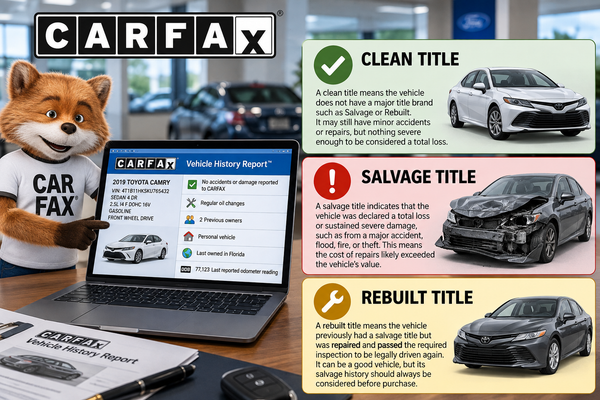
Common CARFAX Terms Explained: Clean Title, Salvage Title, and Rebuilt Title
When reviewing a CARFAX report, you may come across several common terms related to a vehicle’s title status and history. Understanding these terms can help you evaluate a used car more carefully and identify potential issues before making a purchase. Clean Title A Clean Title generally means that the
Where Is CARFAX Used? United States, Canada, and Europe Explained
CARFAX is one of the most widely recognized vehicle history reporting services in North America. It is commonly used by dealerships, private sellers, and car buyers to review a vehicle's background before completing a purchase. Although CARFAX is primarily associated with the United States and Canada, its reports

Total Loss Title Explained: What It Means for a Used Car Buyer
Buying a used vehicle with a low price can look like a great opportunity. But when the vehicle history contains a Total Loss record, the price is only one part of the story. A total loss designation means an insurance company determined that repairing the vehicle was not economically practical